
Smart Home Sales
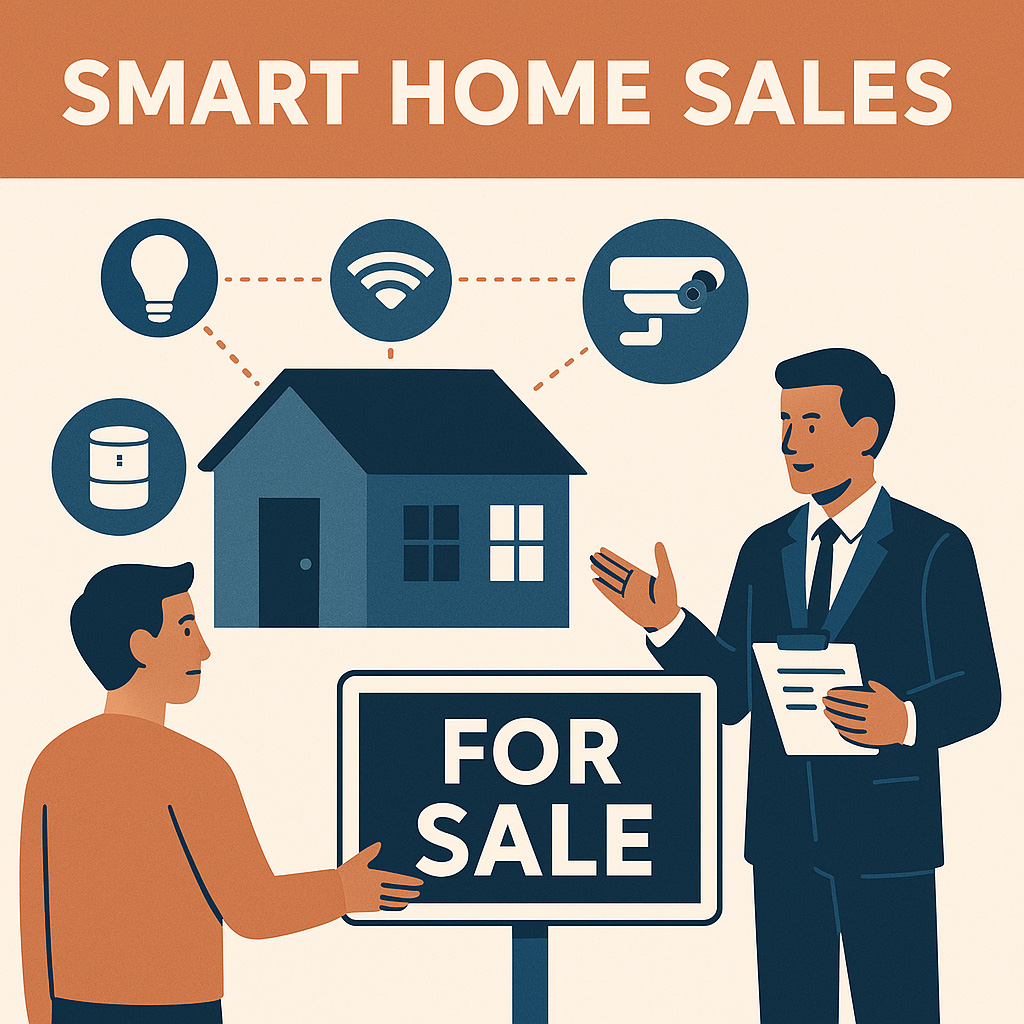
The increasing popularity of smart home technologies has made real estate transactions more interesting—but also more complicated. It is not enough to simply state that a listing is a smart home. What, specifically, does that term mean for this home?
- What technologies are included?
- To what extent are they up-to-date—vs obsolete?
- Are they all in good working order?
- To what extent are they integrated with other technologies?
- Are they programmed to industry standards, or custom-tailored to the specific family needs and preferences of the Seller?
- Are the wired and wireless infrastructures that support the technologies up to date and in good working order?
Navigating Smart Home Transactions Ensuring Clarity for Buyers and Sellers
In order for the transaction to go smoothly, the Seller needs to provide an accurate description of which Smart Home technologies are included in the sale, as well as their condition, and the extent to which they are custom-tailored to current occupant needs. The Buyer needs this information, but also needs answers to a number of additional questions. (see below)
Both Buyer and Seller should be represented by Real Estate Agents who are knowledgeable about smart homes—so that the information they provide to their clients is accurate and complete. To find out who is available locally to represent you in a smart home transaction, see Smart Agent Finder (coming soon).
If the included technologies are simply a collection of free-standing do-it-yourself (IoT) widgets, the questions are simple—whether they work, and are appropriate for the space and intended purpose(s).
If, on the other hand, the technologies are more sophisticated, and integrated together to achieve more ambitious smart home goals, the questions get more complicated. And if they are custom-tailored to the needs of specific users—such as children, or elders Aging-in-Place—a full understanding of how each system has been configured and programmed is essential. See PROVIDERS.
Ensure Your Smart Home Features Are Ready for Sale with a Home Tek™ Inspection
Getting answers to smart home questions is not unlike resolving those for other aspects of the sale, such as the condition of any appliances that are included—the washer, dryer, refrigerator, range, and furnace (with a home inspection), for instance—or the condition of the structure of the home itself (with a structural pest control inspection).
A Home TekTM Inspection examines the Smart Home features that are a part of the sale. It can address many issues, including the following:
- Is the Wired and/or Wireless INFRASTRUCTURE adequate to support the existing technologies installed in the home?
- Do the Wired and Wireless networks provide full and reliable signal strength to the areas of the home—including the patio or other outside spaces—that are likely to need coverage in the Buyer’s smart home plans?
- What components are included in the sale? Are specific components excluded? If so, which ones?
- Are all remote controls and instruction manuals included?
- Do all of the included components meet current industry performance standards (e.g. HDTV), and are they in good working order?
- Have the components been configured and programmed to standard use patterns, or to the special needs of specific family members?
- Have any components/systems been leased from service providers, rather than purchased outright? If so, which ones, and what are the terms and expiration dates of the service contract(s)?
To get full answers to these questions, it makes sense to hire a Smart Home Expert to conduct an inspection of the smart home systems, and then prepare a report. To find a local specialist, see Home TekTM Inspector (coming soon)
Whether or not an inspection is performed—and a report provided—the Seller should fill out and sign a Smart Home Disclosure Statement, detailing important information regarding the smart home features included in the sale of the property.